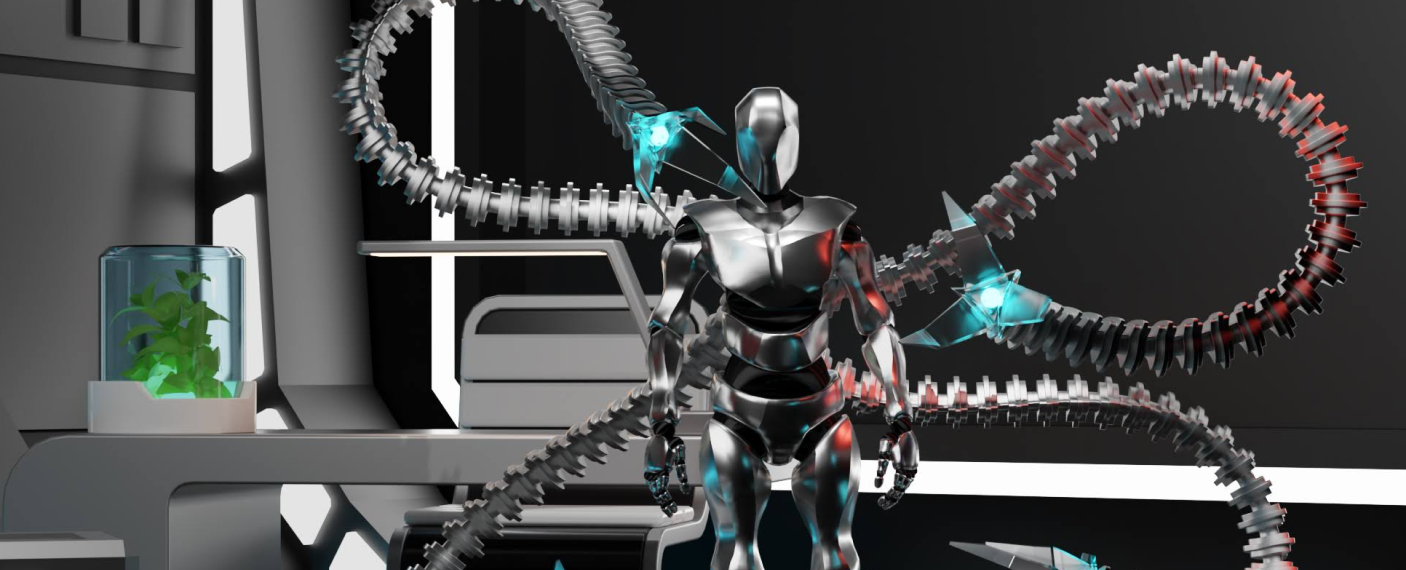
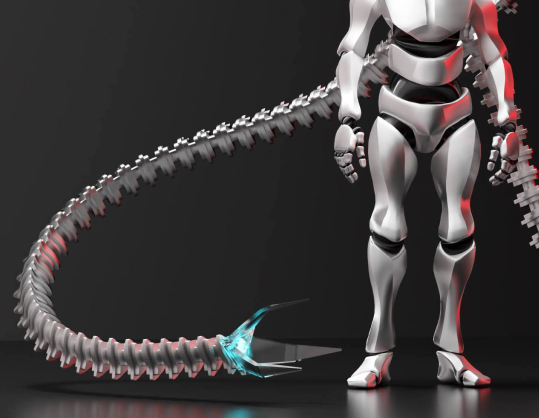
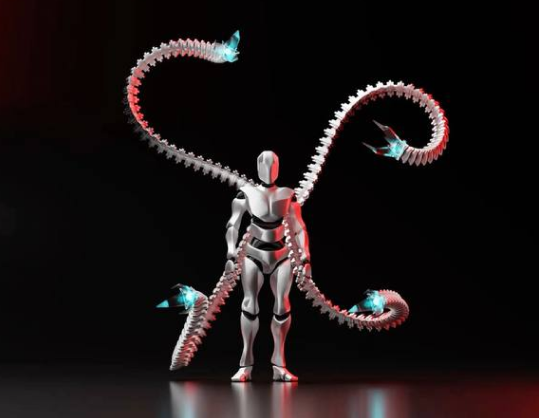
This project served as a focused, high-fidelity technical exercise aimed at accelerating our mastery of Blender’s core production pipeline. The output, a hyper-realistic render of a specialized humanoid entity, was a direct measure of our ability to integrate complex character rigging, material development, and advanced atmospheric lighting into a single, cohesive piece.
Client Brief:
As a self-directed initiative, the brief was defined by the singular objective of accelerated software competency. The core requirement was to complete a photorealistic 3D render, necessitating the successful implementation and synthesis of three key modules: complex skeletal rigging, sophisticated scene lighting, and optimized final rendering. The benchmark for success was the creation of a high-quality visual indistinguishable from professional studio work.
Project Breakdown:
-
Phase I: Hard-Surface Modeling – Construction of the base humanoid mesh and four segmented mechanical arms.
-
Phase II: Advanced Rigging & IK – Implementation of the skeletal structure and custom Inverse Kinematics controls for all limbs.
-
Phase III: Material & Texture Development – Creation of realistic metallic, emissive, and hard-plastic shaders.
-
Phase IV: Cinematic Lighting & Render – Setup of volumetric lights, camera angles, and final Eevee/Cycles render optimization.
Technology Used:
-
Software: Blender 3.x (Modeling, Rigging, Texturing, Rendering)
-
Methodology: Inverse Kinematics (IK) Principles, Hard-Surface Modeling Techniques, Volumetric Lighting (G-scatter/Volumetrics), Cycles/Eevee Render Engine.
-
Resource: Polyfjord (Educational Methodology/Tutorial Reference)